BIRDER

BIRDER

Tuesday, June 14, 2016

Birding in the Adelaide Hills South Australia

This weekend was cold! Very cold, so cold in fact that most normal people would snuggle up on the couch in front of the heater to watch their favourite TV show.

But, I'm not normal.


I spent a freezing morning in Belair National Park. This park is 13 km south east of Adelaide on Upper Sturt Rd, Belair. It has great facilities for families with BBQ's, toilets, picnic areas, but more importantly, many great walking tracks! So, I warmed myself up by hiking for 5 hours carrying my camera.


There are many fungi around at the moment too, after all the recent rain! Yes, it does rain here sometimes, even though SA is the driest state in the driest continent on earth.


I actually lived in Belair National Park for approximately ten years, so I know it pretty well. So I can assure you that there are some great tracks to explore away from the main tourist areas where you can escape the crowds and you may even be able to hike for a couple of hours without seeing another person. Clearly these are my favourite areas!


Heading to Melville Gully


There are stunning areas of Messmate Stringybark (Eucalyptus obliqua & Eucalyptus baxteri) with dense heath understorey which is great habitat for the endangered Southern Brown Bandicoot and gorgeous Yellow-footed Antechinus (a gorgeous dasyurid marsupial). It is interesting to note that only 200 years ago there were 8 species of Bandicoot in SA. Now there is only one, and it is endangered. All due to land clearing and the introduction of feral cats and foxes.


I was rewarded by seeing some great birds and about 15 Koala's  (which are Marsupials, not bears) - but we do like to call them Drop Bears from time to time... 


Golden Whistler


Grey Fantail


Musk Lorikeet


Red-browed Finch


After my hike in Belair I also spent an hour in a tiny little block of native vegetation in Blackwood and managed a couple of photos of a Rose Robin, which is very rare in South Australia.  so I was happy to see this little featherball. Only the second one I've ever seen in SA!


Rose Robin - a rare visitor to SA


Spotted Pardalote - female


White-throated Treecreeper


Koala have sharp claws for climbing


Koala are a marsupial - not a bear!


Adelaide Rosella  (Crimson Rosella)


Friday, May 27, 2016

BITTERNS & Suburban Wetland Birding in Adelaide SA


Wetland birding is always a good option when you don't have time to travel further afield. There is always something to bring you back in touch with nature. 


With various duck species ever present and the always reliable Purple Swamphens and Eurasian Coots, Australasian Grebes and Little Pied Cormorants, you can explore and find something willing to pose for a photo.


A species a bit more challenging is always fun though, whether it be an Australian Reed Warbler, Buff-banded Rail, Spotted Crake or, in this particular case, the elusive and very rare Australasian Bittern.


The call went out about a week ago at a wetland just south of Adelaide that an Australasian Bittern had been seen. I waited a few days before venturing out  to take a look. Ive seen them a few times in the past, at Greenfields Wetland, north of Adelaide as well further away at Bool Lagoon in SE SA and even further east at Picks Swamp near Mt Gambier. However, my current photos were poor and always in flight. So, the chance to try for a perched photo was tempting. 


I tried one morning without luck but on my second attempt was successful immediately! I was happy to see that it was sitting on the outer edge of the reeds! Although a fair distance away, it was visable which is quite unusual for this reclusive species. 


Here are a few photos taken on the day.


Australasian Bittern


Australasian Bittern


Little Pied Cormorant


Australian Reed Warbler


Eurasian Coot


Little Pied Cormorant


What are you looking at?


Australasian Bittern


What do you mean I'm not as exciting as a Bittern??


Monday, April 25, 2016

Brookfield Conservation Park Mallee Birding

Getting out into the mallee is always one of my favourite pass times. So, when a friend suggested we head north this weekend to Brookfield Conservation Park how could I refuse?


Being less than 2 hours from Adelaide - 125km to be exact, it really is a convenient place to visit. You can pick up food and drinks in Truro - the Servo is open very early - before you continue onto Brookfield, approx 36km further north (about 25 minutes).


Brookfield is a major area of mallee vegetation within the Murray-Darling Basin, north of Goyders Line and provides crucial habitat for the Southern Hairy-nosed Wombat. You will see wombat burrows throughout the park as you venture around the 2 main nature trails. I was very happy to see one this evening as it emerged from its burrow.


The nature drives start at the Shearing shed. Travel about 4km to the picnic area where you can follow the well signposted 3 Habitat Walk before continuing on. Further along the track the road splits - you can do the Mallee Track or the Bluebush Track. Both are worth exploring.


Other fauna species at Brookfield include Fat-tailed Dunnart, Red and Western Grey Kangaroo, Common Dunnart, Echidna, as well as various bat species.

Over 100 bird species have been seen here including Malleefowl, Redthroat, Gilbert's Whistler, Australian Owlet Nightjar,  Grey Currawong, Grey Butcherbird, White-winged Chough, Splendid Fairywren, Southern Whiteface, Mulga Parrot, Bluebonnet, Mallee Ringneck, Chestnut-crowned and White-browed Babbler, Chestnut Quail-thrush, Australian Raven, Red-capped Robin, Hooded Robin, Crested Bellbird, Spotted Pardalote, Weebill, Grey Shrike-thrush, Rufous & Golden Whistler, White-eared Honeyeater, Spiny-cheeked & Singing Honeyeater, Mistletoebird, Pallid Cuckoo, Black-eared Cuckoo & Emu.


Please note there is NO camping allowed here but day visiting is allowed. There is a picnic area  provided with toilet and some well sign-posted walks leading off from the picnic area. The 3 Habitats walk is excellent and you might be lucky enough to see a Wombat or Chestnut Quail-thrush!

Here are a few photos from this weekend.


Female Mulga Parrot
 
Hooded Robin


Redthroat


Golden Whistler
 

                                                            White-eared Honeyeater


Chestnut-rumped Thornbill


Galah - Male & Female


Red Kangaroo Joey


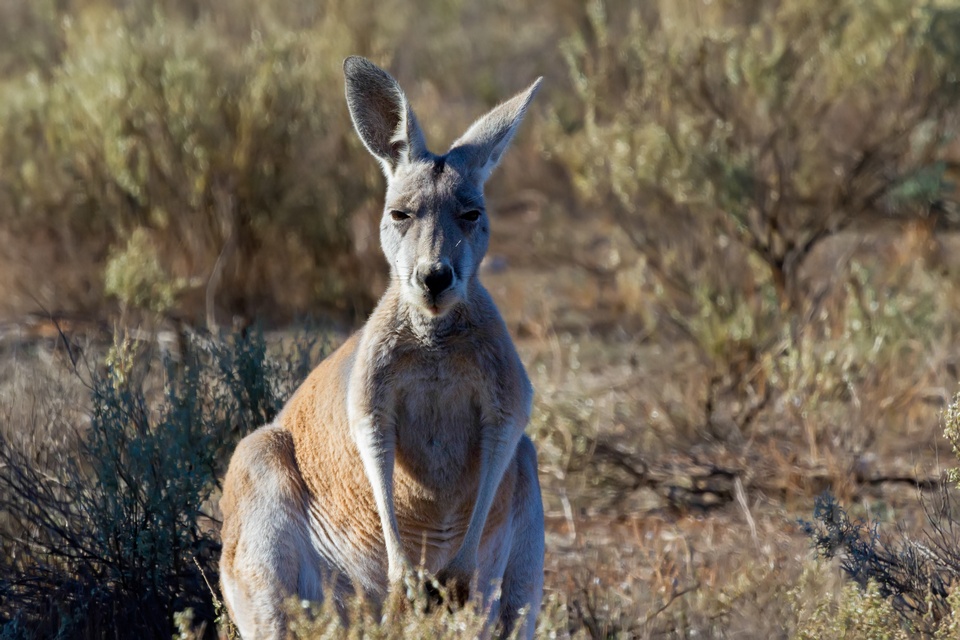
Red Kangaroo - female